

TLDR! If you are a merchant, you can skip to the end of this article to see what to do next if you are a merchant. If you are a consumer, you can skip to the end of this article to see what to do next if you are a consumer.
Let’s suppose you want to pay for a cup of coffee using cryptocurrency. Which cryptocurrency will work for this purpose? Which payment mechanism will work for this cryptocurrency?
I predict that no cryptocurrency other than bitcoin will ever come into everyday use for what I call “walking around money”. I further predict that on-chain bitcoin transfers will never come into into everyday use for “walking-around money”, but that a particular mechanism called “Lightning network” is the one that will come into everyday use. In this blog article I explain these predictions.
I predict that on-chain bitcoin transfers will never come into into everyday use for “walking around money”, for a number of reasons including:
- nobody who is trying to pay for a cup of coffee is going to want to stand around for ten minutes or more to wait for a payment to get recorded in a new block on the chain; and
- nobody is going to want to incur a fee of tens of cents for such a transfer.
I think that right now in 2026, it is already settled that the kind of bitcoin transfer that makes sense for “walking around money” is Lightning network bitcoin, which you can read about in this Wikipedia article.
What one needs to keep in mind is that “network effects” (Wikipedia article) are more important than anything else when it comes to ways to pay money.
In economics, a network effect is the phenomenon by which the value or utility a user derives from a good or service depends on the number of users of compatible products or systems.
Common sense tells you that some proposed new payment system will come into common use only if two things happen — lots of merchants do what it takes to receive that kind of payment, and lots of would-be customers do what it takes to make that kind of payment. It is a classic “chicken and egg” situation. A particular merchant would only be willing to go to the trouble to do what it takes to receive that kind of payment if the merchant figured there would be lots of customers who are able to make that kind of payment. But a particular would-be customer would only be willing to do what it takes to make that kind of payment if the customer figured there would be lots of merchants who are able to receive that kind of payment.
At this point in 2026, the sole cryptocurrency payment system that makes any sense for “walking around money” is, in my view, Lightning network bitcoin. Square, which is one of the world’s best-established systems for retail point-of-sale (POS) terminals, has singlehandedly settled it that Lighting network bitcoin is now and will always be the system of choice for “walking around money”. I predict that no other POS service or equipment provider is ever going to attempt to legitimize any other retail payment solution for bitcoin, and that no cryptocurrency other than bitcoin is going to move into the mainstream for POS systems.
Any merchant that uses Square for its point-of-sale system can turn on Lightning network bitcoin with a single mouse click. For such a merchant, the cost to make it possible to be paid in bitcoin is the time it takes to click a mouse.
Many a merchant might nonetheless be hesitant to deal in bitcoin because of its volatility. Why receive bitcoin when, half an hour from now, the bitcoin might have changed in value (compared with a dollar)? And Square has an answer for this as well. With a second mouse click, the merchant can configure the Square system so that the bitcoin payment from the customer is instantly converted to dollars. If a customer was trying to pay, say, five dollars (using bitcoin), then the merchant will actually receive that exact same same five dollars. The merchant is insulated from any volatility in the price of bitcoin.

What about the would-be customer who is considering doing what it takes to be able to pay for stuff using Lightning network bitcoin? How difficult is this, and how much time does it take, and what does it cost? Nowadays it is not difficult, and it does not take a lot of time, and it is nearly cost-free. For anyone who already owns some bitcoin (presumably being held using a “cold” or hardware wallet), the extra effort to do what it takes to be able to pay for stuff using Lightning network bitcoin is small. You download the Muun app to your smart phone, set up the app, and fund it with some modest amount of bitcoin. You can read about Muun in this blog article.
What might motivate a merchant to do the two mouse clicks to turn on bitcoin Lightning? One thing is fees. In the $5 purchase that I described here, as the sender, I incurred a fee of three sats, which amounts to about ⅕ of a cent, or about 0.04% of the amount being paid. The merchant incurred no fee, because the payment service provider (Square) is waiving its fees on bitcoin through the year 2026. Square says that starting in 2027, it will charge a 1% commission for processing bitcoin.
Any merchant that gets paid with credit or debit cards knows exactly what commission the merchant incurs. It is 2.9% of the payment amount, plus 35¢. Any purchaser that can be shifted over to a bitcoin payment is a purchaser whose payment will incur a mere 1% fee (or, during 2026, a zero fee) compared with 2.9%. In a busy day, that smaller commission could really add up to a lot of savings in fees for the merchant.
There are online maps (for example btcmap.org) that make it easy for a would-be customer to find merchants that are willing to be paid in bitcoin. And there are some customers who possess bitcoin and would like to find places to spend that money. A merchant that goes to the trouble of doing the two mouse clicks to turn on bitcoin Lightning might find a customer coming in the door, who went to some trouble to find that merchant, so as to be able to spend some bitcoin.
So if a merchant is already using a Square point-of-sale system, I see little reason to hold back from doing the two mouse clicks to turn on bitcoin Lightning. It costs essentially nothing to do it, and the decision to do the two mouse clicks might lead to commissions of 1% instead of 2.9%. And the decision to do the two mouse clicks might bring a new customer in the door.
At this point in 2026, when people are splitting a restaurant check or reimbursing each other for small amounts of money, the typical payment methods used are Zelle and Venmo. I predict that as time goes on, more and more people will have a Lightning network app on their smart phone and will be able to use Lightning to settle up many of the small personal payments that until now would get done through Zelle or Venmo.
Consider, too, the benefits in foreign travel. A traveler in a foreign country, paying with any traditional payment mechanism or currency, will surely incur currency conversion fees and transaction fees. The merchant receiving a payment from the traveler (if it is a credit card payment) will surely incur currency conversion fees and transaction fees. It is commonplace to see an extra 1% fee being tacked on for an international payment.
But if the traveler in the foreign country pays using bitcoin Lightning, the fee might be the same ⅕ of a cent that I paid. The merchant, receiving the bitcoin Lightning payment, might incur only a 1% fee instead of a fee of 2.9% or 3.9% or more for a credit card payment.
What to do next if you are a merchant? If you are a merchant and if your POS system is Square, I suggest that you do the two mouse clicks that are needed to turn on bitcoin and to exchange it instantly to dollars. Click on 
and then click on “bitcoin” here:
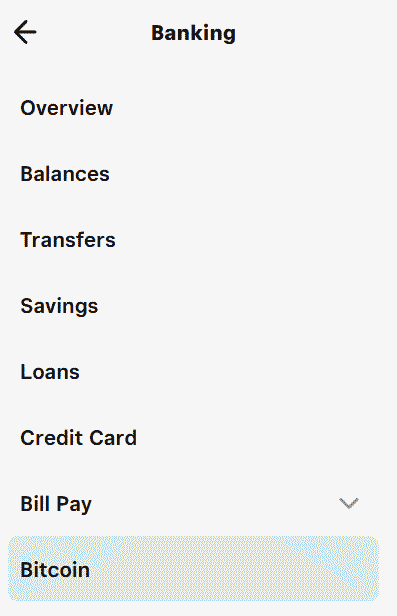
Click Get started and complete the setup of your bitcoin wallet. Next to Bitcoin, tap Activate.
Then, assuming you want to avoid any exposure to volatility in the price of bitcoin, click “payments received as” and select USD instead of the default value “bitcoin”. The bitcoin payments is instantly converted to USD—just like a regular credit card payment. This USD amount arrives in your regular Square balance, found under Banking.
If, after this, nobody ever chooses to pay you in bitcoin, you are no worse off. It did not cost any money to do these mouse clicks.
If, on the other hand, somebody chooses to pay you in bitcoin, you save money on fees. Instead of incurring a 2.9% credit card commission, you will incur only a 1% fee or (during 2026) a zero fee.
What to do next if you are a consumer? If you already have some bitcoin, you might as well do the small number of mouse clicks to download and install and fund a hot wallet that supports bitcoin Lightning. I think a very good choice is the Muun wallet (see blog article). Do not fund it with a large amount of bitcoin! Just ask yourself how much money you might keep in your wallet or pocket or purse, and limit the balance in your Muun wallet to that much money. It costs no money to get the app or to install it. If you later decide this isn’t for you, you could always transfer the bitcoin from Muun back to where you were keeping it before, and delete the Muun wallet.
Leave a Reply