
In this article I discuss how to pick a cold wallet. By this we mean a hardware wallet for management of your on-chain cryptocurrency.
| Model One | Model T | Safe 7 | |
 |
 |
 |
|
| price $ | 19 | 52 | 249 |
| weight (ounces)? | 0.42 | 0.77 | 1.6 |
| IP-54 rated? | no | no | yes |
| supports SLIP-39 backup? | no | yes | yes |
| haptic feedback? | no | no | yes |
| Qi charging? | no battery | no battery | yes |
| secure element? | no | no | yes, transparent |
| Bluetooth? | no | no | yes |
Open-source? For me, the starting point in the selection of a cold wallet is to avoid any wallet for which the firmware is proprietary. (With proprietary firmware, the user community is unable to independently review the firmware for vulnerabilities or backdoors.) Saying this differently, the firmware needs to be open-source. For commercial cold wallets, it turns out that this eliminates every brand that is not Trezor. The reader that is looking for a non-Trezor commercial cold wallet can thus skip the rest of this article.
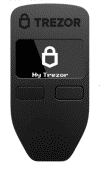
Cost. The Model One is on sale on Amazon for $19. The Model One was the very first practical commercial cold wallet. Every commercial cold wallet that you have ever seen that is not the Model One was released after it and was inspired by it. The Model One is by far the most widely used and least expensive of all cold wallets, and its open-source firmware has prompted many to trust it, since its release in 2014, over any other brand of cold wallet. Even now, after more than a decade in service, the Model One is a perfect entry-level cold wallet because it is so much less expensive than all of the others. You could start with this cold wallet and take your time figuring out whether you really care about cryptocurrency, and later maybe upgrade to a newer and fancier model.
Size and weight? It is difficult to imagine how any cold wallet could be lighter in weight, or smaller, than the Model One.
Works with iPhones? iPhones lack a USB port. The only Trezor wallet that can connect to an iPhone and provide full functionality is the Safe 7 (through its Bluetooth connectivity).
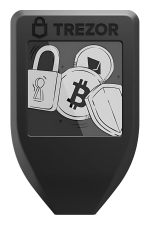
Can provide backup for a Safe 7? A natural thing to consider is what you would do if your cold wallet were to get run over by a truck? Yes, you could type your seed phrase into one of the many “hot wallets” that are free of charge and are instantly available, but then you are exposing your assets to the risks of a hot wallet. The safer path is to type your seed phrase into another cold wallet (Trezor, of course, if you share my focus on open-source firmware). But which cold wallet will serve your needs? If you already use a Safe 7 or any of a large range of modern cold wallets, then your seed phrase probably is twenty words (meaning that it is a SLIP-39 backup). The Model One does not support SLIP-39. The least expensive Trezor cold wallet that supports SLIP-39 is the Model T, which explains why I included that cold wallet in this article.
Has an NDA-free (“transparent”) secure element? In the early years of cryptocurrency, many may have thought it to be in the nature of a hobby, where the amounts of money changing hands were small enough that “losing everything” was not life-changing. By now in 2026, some users choose to buy and hold amounts of cryptocurrency that are large enough that “losing everything” could be catastrophic. For such a user, there is no choice but to give at least some consideration to the difficulty or ease with which a bad actor that had gotten its hands on someone’s cold wallet might be able to extract the user’s private cryptographic key from it. (With that key, the bad actor could steal all of the cryptocurrency and it would likely be impossible to get it back.) The earliest cold wallets simply stored the key in ordinary nonvolatile memory, and with such a cold wallet, the bad actor might be able to extract the private cryptographic key using readily available tools.
By now in 2026, some makers of cold wallets have upped the game, storing the key in a “secure element” that is designed to make it much harder for a bad actor to extract the key. But most of the supposedly “secure element” chips are themselves proprietary. If the maker of the secure element even makes it possible to audit the chip’s design (and not all makers of such secure elements even make this possible), it is only upon signing of a non-disclosure agreement (NDA) that the would-be auditor can commence the audit.
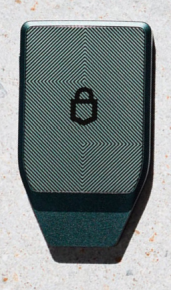
Wouldn’t it be nice if some maker of a cold wallet were to not only to make its firmware open-source, but if the maker were also to store the key in a secure element that is itself open-source? Wouldn’t it be nice if the secure element were NDA-free? The alert reader knows where I am going with this — the sole cold wallet satisfying all of these wishes is the Safe 7. As mentioned above the Safe 7, like all other Trezor cold wallets, has open-source firmware. The point of this discussion, however, is that the Safe 7, unlike any other cold wallet now on the market, stores the user’s cryptographic key in an NDA-free secure element (called the TROPIC01).
Other nice things about the Safe 7. Let’s suppose that by now the reader has settled upon the Safe 7. If so, then what are the other nice features of this cold wallet? It is IP54-rated for resistance to dust and moisture. It provides haptic feedback (it buzzes gently each time your tap on the touch screen registers as an input). Its battery can be charged wirelessly (Qi charging).
How to proceed? For any would-be new entrant into the world of cryptocurrency, I cannot think of any reason to spend more than the $19 of the Trezor Model One. Yes, this means that if the would-be new entrant’s mobile phone is not an Android phone, the would-be new entrant will be limited to use of a notebook or desktop computer.
For any user of cryptocurrency who chooses to store assets on-chain, and in amounts large enough that their loss could be catastrophic, I do not see any rational choice other than the Trezor Safe 7.
Leave a Reply